TR

Trattoria Roma

online

WhatsApp
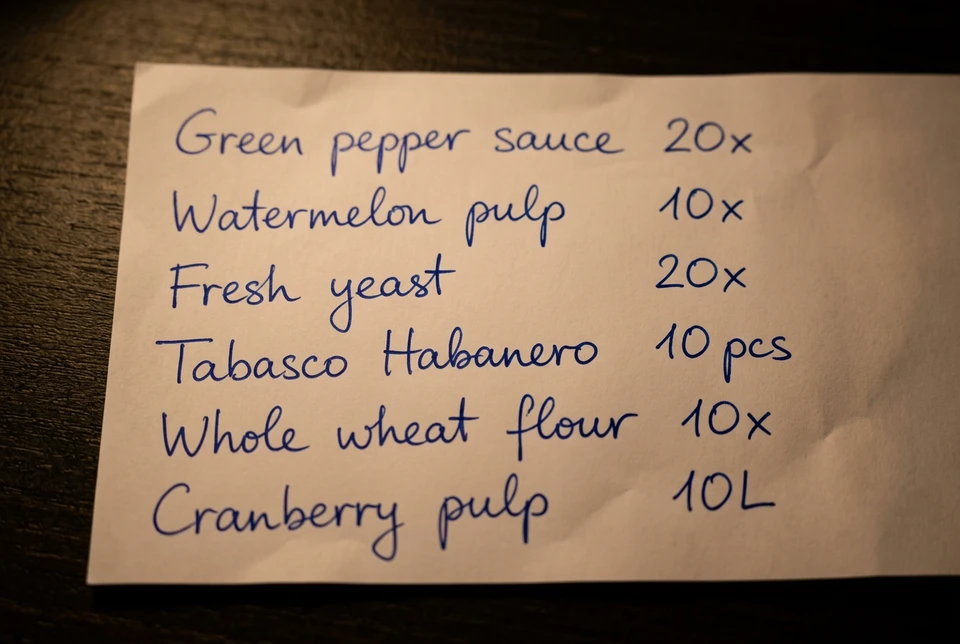
Handwritten restaurant order sent over WhatsApp

23:47

Order captured

6 line items read, validated and synced to your ERP.

23:47 · by evolio.ai

Processed while the team slept

0 missed

A pilot measured on your real customer orders

We sign the agreement and complete onboarding, but we do not bill the subscription until evolio.ai reaches at least 80% accuracy on your company's orders.

Launch offer

We'll run them through evolio.ai and send you an accuracy report in 48 hours. No subscription, no ERP access needed.

Launch offer

A pilot measured on your real customer orders

We sign the agreement and complete onboarding, but we do not bill the subscription until evolio.ai reaches at least 80% accuracy on your company's orders.

80%

No subscription until 80% accuracy

Accuracy is evaluated on the orders and documents your team actually receives. You see the results in your own workflow before the subscription begins.

You can start without an ERP integration

The first pilot can be deliberately small and practical:

Send us invoice history in PDF or XLS for the initial configuration.

evolio.ai identifies the customer, products and quantities in new orders.

Receive structured orders in Excel, CSV, PDF, XML, via webhook or another import-ready format.

Connect the ERP later, after you have verified the system's results.

Start with the customers and WhatsApp account of a single sales representative.

Free pilot onboarding for all companies

Pilot onboarding is free for all companies. It includes configuration, analysis of existing orders and documents, and adaptation to the distributor's workflow.

Do not take our word for it. Test us on the difficult orders.

Send a few examples you believe would be difficult or impossible to process automatically. We will review them before the meeting and discuss your real cases instead of showing a generic demo.

Book a pilot call

How to Run an AI Order Entry Pilot on Your Own Orders

A useful AI order entry pilot tests your real orders against your catalogue and operating rules. Start with a manageable scope, define what success means, and include difficult cases. Interpretation can be assessed before introducing a live ERP connection, then the complete workflow can be validated.

1. Choose a representative sample

Include your normal order channels, customer types and document formats. Add difficult cases: similar product names, unclear units, poor photographs, voice notes, changes and repeated submissions. A sample containing only clean examples will not show how the process handles daily exceptions.

2. Prepare the reference data

Agree which catalogue, customer and historical information is needed. Use current reference data and share only what is relevant. Check how customer descriptions, pack sizes and units will be interpreted. Historical invoices may help configuration but should not replace current business rules.

3. Define success before looking at the results

Specify whether you are measuring customer identification, product and quantity interpretation, complete orders or final ERP delivery. Record corrections and manual intervention. The published pilot threshold must have an agreed definition; it should not be confused with permission to send every order automatically.

4. Agree approvals and exceptions

Decide whether the company requires general approval, selected approvals or automatic processing for clear, validated orders. Define who handles incomplete requests and what happens outside office hours. Confirm the supported behavior for duplicate submissions and changes to existing orders.

5. Validate the connection and compare effort

After checking structured results, test the agreed ERP delivery method in a controlled scope. Verify customer and product identifiers, quantities and units in the destination. Compare the active handling time with the previous process, including review and exceptions. Use these measured results to decide whether to expand.

Separate the initial test from the configured pilot

Start with the published offer to send 20 real orders and receive a report in 48 hours, without a subscription or ERP access. This initial evaluation is different from configuring a pilot after signing the agreement.

Pilot onboarding is free for all companies. The published subscription condition remains at least 80% accuracy on the company's orders. Agree how that metric is calculated before testing; it does not mean every interpreted order can be released autonomously.

Complete onboarding and ERP integration are free for 24-month contracts, subject to the published terms and technical validation. Confirm the scope, responsibilities and actual connection method before expanding the pilot.

Related questions

How do we prevent the same customer order being entered twice?

Preventing duplicate entry requires agreed checks around customer identity, order references, repeated messages and delivery into the ERP. Similar-looking orders are not always duplicates: a customer may intentionally reorder the same items. Ask which duplicate controls are available in the proposed implementation and test both repeated submissions and genuine repeat purchases. Do not assume that AI extraction alone provides duplicate protection.

Direct link to this answer

What happens if a customer changes an order after sending it?

A change must be associated with the correct original order and handled according to its current status. A request received before ERP delivery differs from a change received after picking has started. Define the modification workflow with your team and implementation partner. Do not assume that follow-up messages automatically update a confirmed ERP order; verify the supported behavior during the pilot.

Direct link to this answer

How can our team tell whether an order is ready, incomplete or awaiting approval?

A useful workflow distinguishes processing status from approval status. An order can be interpreted successfully yet wait for commercial approval, or be incomplete and need clarification. It can also be ready for delivery to the ERP or already delivered. Confirm which statuses and notifications your implementation provides and who handles each exception. These responsibilities should be tested before live use.

Direct link to this answer

What if a customer sends parts of one order through different channels?

Combining requests across channels requires identifying the customer and determining whether messages belong to one order or to separate orders. The same customer may use WhatsApp for a request and email for a document, but that does not make every message part of the same transaction. Include these cases in the pilot and confirm the supported workflow; automatic cross-channel merging should not be assumed.

Direct link to this answer

What data is needed to start an AI order entry pilot?

Start with representative customer orders and enough reference data to identify customers and products. This may include your customer list, catalogue, units of measure and relevant historical documents. Agree the minimum dataset for your pilot and share only what is needed. A useful test includes both routine orders and difficult cases, rather than only examples that are easy to interpret.

Direct link to this answer

Does every AI-generated order need human approval?

No. Approval depends on your company's policy. A customer may require approval for every order, for selected orders, or allow clear and validated orders to continue automatically under agreed rules. Incomplete or uncertain orders still need exception handling. Commercial approval and resolving an interpretation problem are different tasks, so define both during onboarding.

Direct link to this answer

How should we measure AI order entry accuracy?

Define the metric before testing. Correctly identifying a customer, matching each product and quantity, and completing an entire order are different measures. Evaluate both the interpretation result and the data delivered through your ERP workflow. Report exceptions and required corrections as well as successful cases. A headline accuracy percentage is meaningful only when its definition, sample and review policy are clear.

Direct link to this answer

Can we test evolio.ai with our real orders before connecting the ERP?

Yes. An initial evaluation can focus on interpreting your actual customer orders and inspecting the structured results before a live ERP connection is introduced. Use the current pilot offer and agree the sample, reference data, output format and success criteria. Include difficult orders and corrections, then validate the integration and approval rules before moving to a production workflow.

Direct link to this answer

What should we check about customer data and security before a pilot?

Confirm which data is needed, where it is processed, who can access it, how long it is retained and which third parties are involved. Ask for the applicable privacy and contractual information, including responsibilities for customer and employee data. Share the minimum relevant information for the test. Do not infer certifications, hosting locations or model-training policies from the use of AI.

Direct link to this answer
See all questions

Shall we schedule a 30-minute demo?

We'll first understand your company's requirements, then tailor the demo to your needs. As a startup, evolio.ai benefits from the direct involvement of its founder, Radu Vilceanu, who personally joins customer meetings to understand their requirements as thoroughly as possible.